
The first time Eleanor picked up a watercolor brush, she didn’t mean to start anything new.
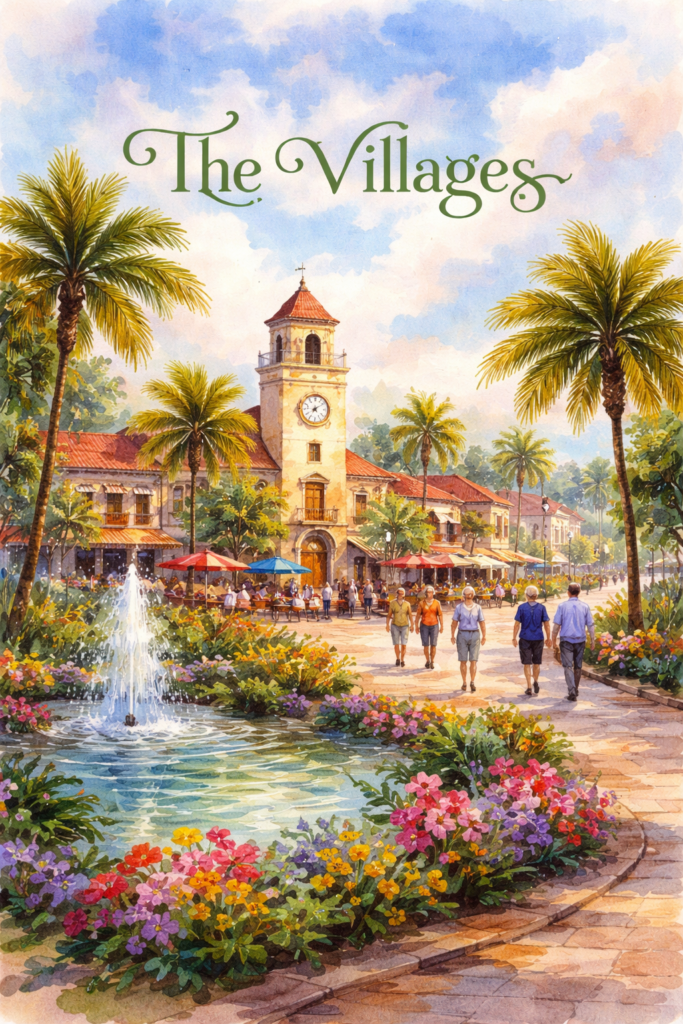
It was a Tuesday morning in The Villages, the kind that felt identical to a hundred others before it. The air was already warm, the ceiling fan hummed lazily, and the clock ticked just loud enough to remind her that time was, as always, moving forward whether she noticed or not.
She had signed up for the class on a whim. A flyer pinned crookedly to a bulletin board: Watercolor for Beginners — No Experience Needed.
“No experience,” she muttered at the time. “Perfect.”
Now she sat at a long table with strangers—each with a small cup of water, a palette of colors, and a blank sheet of paper that felt more intimidating than any challenge she’d faced in years.
“Just let the water do some of the work,” the instructor said gently.
Eleanor dipped her brush into the blue. Too much water. It pooled, spread, and ran where it pleased, ignoring her careful intentions. She frowned.
“That’s not what I meant to do,” she whispered.
But the woman beside her leaned over. “Looks like a sky,” she said.
Eleanor paused.
A sky?
She tilted her head. The uneven wash, the soft edges, the accidental gradients—it did look like a sky. Not perfect, not planned, but… real.
She added a bit of yellow. It bled into the blue, turning green in places, gold in others. A horizon appeared. Then, without thinking too much about it, she dragged her brush across the lower half—just once.
Land.
By the end of the class, she held up a painting she never intended to create. It wasn’t technically impressive. The proportions were off. The colors wandered. But it felt alive in a way she hadn’t expected.
Driving home, she kept glancing at it on the passenger seat.
That night, she didn’t turn on the television. Instead, she set the painting on her kitchen table and sat across from it with a cup of tea. The house felt quieter than usual—but not empty.
Over the next weeks, Tuesdays changed.
The clock still ticked. The fan still hummed. But now there were small rituals: choosing colors, watching water spread, letting mistakes become something else. She stopped trying to control every brushstroke. Some days the paint behaved; most days it didn’t. Either way, something always emerged.
One afternoon, as she painted a loose cluster of flowers that refused to look like any species she recognized, she caught herself smiling.
Not the polite smile she gave neighbors. Not the automatic one for phone calls.
A real one. Unplanned.
She set the brush down and looked at her hands—stained faintly with blue and red.
“Would you look at that,” she said to no one in particular.
The truth was, Eleanor hadn’t just learned how to paint.
The first time Eleanor picked up a watercolor brush, she didn’t mean to start anything new.
It was a Tuesday morning in The Villages, the kind that felt identical to a hundred others before it. The air was already warm, the ceiling fan hummed lazily, and the clock ticked just loud enough to remind her that time was, as always, moving forward whether she noticed or not.
She had signed up for the class on a whim. A flyer pinned crookedly to a bulletin board: Watercolor for Beginners — No Experience Needed.
“No experience,” she muttered at the time. “Perfect.”
Now she sat at a long table with strangers—each with a small cup of water, a palette of colors, and a blank sheet of paper that felt more intimidating than any challenge she’d faced in years.
“Just let the water do some of the work,” the instructor said gently.
Eleanor dipped her brush into the blue. Too much water. It pooled, spread, and ran where it pleased, ignoring her careful intentions. She frowned.
“That’s not what I meant to do,” she whispered.
But the woman beside her leaned over. “Looks like a sky,” she said.
Eleanor paused.
A sky?
She tilted her head. The uneven wash, the soft edges, the accidental gradients—it did look like a sky. Not perfect, not planned, but… real.
She added a bit of yellow. It bled into the blue, turning green in places, gold in others. A horizon appeared. Then, without thinking too much about it, she dragged her brush across the lower half—just once.
Land.
By the end of the class, she held up a painting she never intended to create. It wasn’t technically impressive. The proportions were off. The colors wandered. But it felt alive in a way she hadn’t expected.
Driving home, she kept glancing at it on the passenger seat.
That night, she didn’t turn on the television. Instead, she set the painting on her kitchen table and sat across from it with a cup of tea. The house felt quieter than usual—but not empty.
Over the next weeks, Tuesdays changed.
The clock still ticked. The fan still hummed. But now there were small rituals: choosing colors, watching water spread, letting mistakes become something else. She stopped trying to control every brushstroke. Some days the paint behaved; most days it didn’t. Either way, something always emerged.
One afternoon, as she painted a loose cluster of flowers that refused to look like any species she recognized, she caught herself smiling.
Not the polite smile she gave neighbors. Not the automatic one for phone calls.
A real one. Unplanned.
She set the brush down and looked at her hands—stained faintly with blue and red.
“Would you look at that,” she said to no one in particular.
The truth was, Eleanor hadn’t just learned how to paint.
She had learned how to begin again—softly, imperfectly, with water and color and the quiet understanding that not everything needed to be controlled to be beautiful.
She had learned how to begin again—softly, imperfectly, with water and color and the quiet understanding that not everything needed to be controlled to be beautiful.
The first time Eleanor picked up a watercolor brush, she didn’t mean to start anything new.
It was a Tuesday morning in The Villages, the kind that felt identical to a hundred others before it. The air was already warm, the ceiling fan hummed lazily, and the clock ticked just loud enough to remind her that time was, as always, moving forward whether she noticed or not.
She had signed up for the class on a whim. A flyer pinned crookedly to a bulletin board: Watercolor for Beginners — No Experience Needed.
“No experience,” she muttered at the time. “Perfect.”
Now she sat at a long table with strangers—each with a small cup of water, a palette of colors, and a blank sheet of paper that felt more intimidating than any challenge she’d faced in years.
“Just let the water do some of the work,” the instructor said gently.
Eleanor dipped her brush into the blue. Too much water. It pooled, spread, and ran where it pleased, ignoring her careful intentions. She frowned.
“That’s not what I meant to do,” she whispered.
But the woman beside her leaned over. “Looks like a sky,” she said.
Eleanor paused.
A sky?
She tilted her head. The uneven wash, the soft edges, the accidental gradients—it did look like a sky. Not perfect, not planned, but… real.
She added a bit of yellow. It bled into the blue, turning green in places, gold in others. A horizon appeared. Then, without thinking too much about it, she dragged her brush across the lower half—just once.
Land.
By the end of the class, she held up a painting she never intended to create. It wasn’t technically impressive. The proportions were off. The colors wandered. But it felt alive in a way she hadn’t expected.
Driving home, she kept glancing at it on the passenger seat.
That night, she didn’t turn on the television. Instead, she set the painting on her kitchen table and sat across from it with a cup of tea. The house felt quieter than usual—but not empty.
Over the next weeks, Tuesdays changed.
The clock still ticked. The fan still hummed. But now there were small rituals: choosing colors, watching water spread, letting mistakes become something else. She stopped trying to control every brushstroke. Some days the paint behaved; most days it didn’t. Either way, something always emerged.
One afternoon, as she painted a loose cluster of flowers that refused to look like any species she recognized, she caught herself smiling.
Not the polite smile she gave neighbors. Not the automatic one for phone calls.
A real one. Unplanned.
She set the brush down and looked at her hands—stained faintly with blue and red.
“Would you look at that,” she said to no one in particular.
The truth was, Eleanor hadn’t just learned how to paint.The first time Eleanor picked up a watercolor brush, she didn’t mean to start anything new.
It was a Tuesday morning in The Villages, the kind that felt identical to a hundred others before it. The air was already warm, the ceiling fan hummed lazily, and the clock ticked just loud enough to remind her that time was, as always, moving forward whether she noticed or not.
She had signed up for the class on a whim. A flyer pinned crookedly to a bulletin board: Watercolor for Beginners — No Experience Needed.
“No experience,” she muttered at the time. “Perfect.”
Now she sat at a long table with strangers—each with a small cup of water, a palette of colors, and a blank sheet of paper that felt more intimidating than any challenge she’d faced in years.
“Just let the water do some of the work,” the instructor said gently.
Eleanor dipped her brush into the blue. Too much water. It pooled, spread, and ran where it pleased, ignoring her careful intentions. She frowned.
“That’s not what I meant to do,” she whispered.
But the woman beside her leaned over. “Looks like a sky,” she said.
Eleanor paused.
A sky?
She tilted her head. The uneven wash, the soft edges, the accidental gradients—it did look like a sky. Not perfect, not planned, but… real.
She added a bit of yellow. It bled into the blue, turning green in places, gold in others. A horizon appeared. Then, without thinking too much about it, she dragged her brush across the lower half—just once.
Land.
By the end of the class, she held up a painting she never intended to create. It wasn’t technically impressive. The proportions were off. The colors wandered. But it felt alive in a way she hadn’t expected.
Driving home, she kept glancing at it on the passenger seat.
That night, she didn’t turn on the television. Instead, she set the painting on her kitchen table and sat across from it with a cup of tea. The house felt quieter than usual—but not empty.
Over the next weeks, Tuesdays changed.
The clock still ticked. The fan still hummed. But now there were small rituals: choosing colors, watching water spread, letting mistakes become something else. She stopped trying to control every brushstroke. Some days the paint behaved; most days it didn’t. Either way, something always emerged.
One afternoon, as she painted a loose cluster of flowers that refused to look like any species she recognized, she caught herself smiling.
Not the polite smile she gave neighbors. Not the automatic one for phone calls.
A real one. Unplanned.
She set the brush down and looked at her hands—stained faintly with blue and red.
“Would you look at that,” she said to no one in particular.
The truth was, Eleanor hadn’t just learned how to paint.
https://www.vrbo.com/5132265?dateless=true
https://shorturl.fm/A2ZF9